MOOCs & Online Education in India
Deprecated: htmlspecialchars(): Passing null to parameter #1 ($string) of type string is deprecated in /home/nqtjeubh/public_html/wp-includes/formatting.php on line 4724
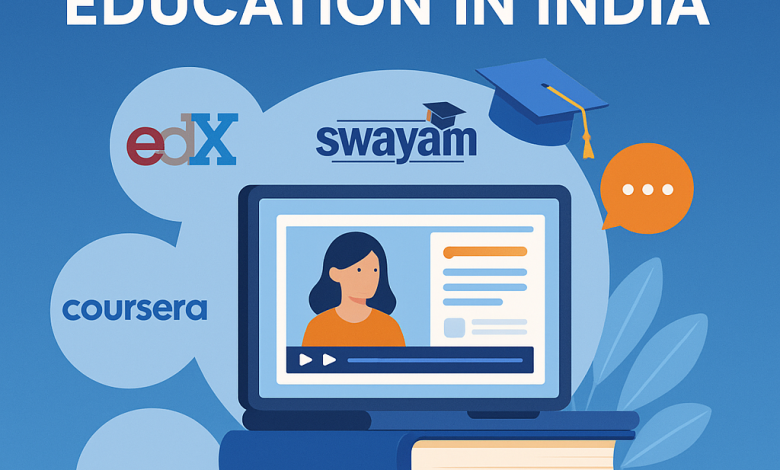
ndia’s online education scene has exploded. With MOOCs (Massive Open Online Courses), online degree programs, and skill-development platforms, learning is now accessible to millions across cities and rural areas alike. But with so many options, how do you choose the right one? What platforms are worth your time? Let’s dive in.
What Are MOOCs & Why They Matter
- MOOCs are online courses offered by universities or institutions, often free or low-cost, available to anyone with internet. They let learners study at their own pace.
- In India, MOOCs help bridge educational gaps, provide access to top-quality teaching, and enable upskilling without physical constraints.
- With government initiatives like SWAYAM and NPTEL, as well as many private platforms, MOOCs are now a key tool for lifelong learning and upskilling. Swayam+2Wikipedia+2
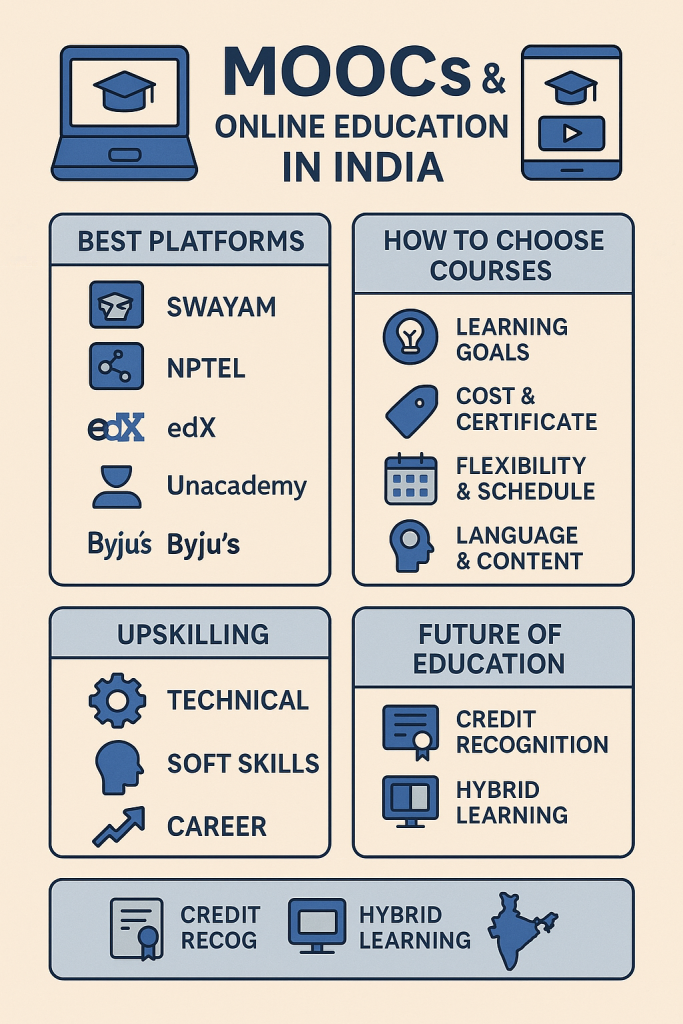
Top Online / MOOC Platforms in India (Free & Paid)
Here are some of the best platforms, what they offer, and their pros & cons:
| Platform | What It Offers | Free vs Paid | Key Strengths | Things to Note |
|---|---|---|---|---|
| SWAYAM | Launched by Indian government, covers everything from school to postgraduate courses; users can earn academic credit; many courses from IITs, IIMs etc. Swayam+2Edukatico+2 | Mostly free; certificate / exam fees apply for some courses | Recognized by universities; broad course variety; credible content | Enrollment periods often fixed; certificate cost; course pace may be slower than private platforms |
| NPTEL | STEM subjects, engineering, basic sciences, with lectures by top faculty; free access to content, optional paid certification exams. Wikipedia+1 | Free for majority; fee for exam or certificate | Highly credible, especially in engineering; good for technical/building strong fundamentals | Limited in non-STEM fields; may have less “interactive” content; requires self-discipline |
| MOOC.org / edX | International platform with courses from Harvard, MIT etc.; wide range: business, tech, humanities. Some courses free to audit, certificate / full programs paid. MOOC.org+1 | Free audit option; paid certificate/programs | Global recognition; high quality content; good for advanced learners or specialization | Cost of certificates can be high; some courses less aligned with Indian context; schedule may follow many time zones |
| Unacademy | Indian platform known for competitive exam prep (JEE, NEET, UPSC etc.), K-12 content; live classes + recorded videos; subscription model. Wikipedia | Freemium / subscription | Strong in exam prep; well known teachers; content in regional languages too | Paid plans required for premium content; live class schedule may not always align with your time; less focused on full degree-level MOOCs |
| Byju’s | Broad learning app including school curriculum, videos, concept explanations, and test prep; good for younger students. Wikipedia | Mostly paid; some free trial content | Strong visuals, explanations; good for school level; brand recognition | Heavy cost for full access; sometimes criticized for aggressive marketing; less for adult learners seeking degree or specialization |
How to Choose the Right Course / Platform
When evaluating what’s best for you, consider these:
- Your Learning Goal
- Do you want a degree / credit? → Go SWAYAM, NPTEL or courses that offer credit transfer.
- Want to upskill or learn new skills for job or side hustle? → Private platforms or edX/Coursera specialization programs.
- Cost & Certificate
- Free content is great to start. But certifications often cost money, so check fees before enrolling.
- Consider if certificate is recognized in your field or by employer.
- Flexibility & Schedule
- Self-paced vs fixed schedule (live classes).
- Deadlines, assignment schedules, exam dates: do these match your personal/time constraints?
- Language & Regional Relevance
- Courses in regional languages or with subtitles help.
- Some platforms adapt content to Indian syllabus, which can help for exams or local job markets.
- Depth & Credibility
- Who are instructors? Are they from reputed universities or institutions?
- Course content quality: videos, reading material, quizzes, peer interaction.
- Reviews / alumni feedback.
- Support & Community
- Forums / doubt-clearing sessions / mentorship help a lot.
- Look for platforms with active discussion boards or teacher interaction.
Free vs Paid: What to Expect
| Feature | Free / Audit / MOOC-only | Paid / Certificate / Subscription |
|---|---|---|
| Access to video lectures & reading material | Yes in many cases | Yes, sometimes earlier access or better quality |
| Certificate of completion | Sometimes free, often paid | Included or cheaper when you pay or subscribe |
| Assignments & feedback / graded quizzes | Varies; may be limited or auto-graded | More thorough with mentor / instructor feedback |
| Degree or academic credit | Rare; SWAYAM/NPTEL sometimes offer this | Usually yes if you pay for the program (e.g Coursera, edX) |
| Support / mentorship | Minimal in free courses | Better with paid: live sessions, doubt solving, extra resources |
Internal Example / Related Topic Ideas
You might already have content on:
- “How to Learn Coding for Free in India”
- “Best Platforms for UPSC / NEET Preparation Online”
- “Skills Employers Want in 2025: Soft Skills + Technical”
You can link those in your blog (internal links) to increase time on site and SEO. For example: If you want coding, see our post on “Free Coding Courses in India” → [your-site]/free-coding-courses.
The Future of MOOCs & Online Education in India
- Growing recognition of online credits: Government is pushing credit frameworks (like UGC/AICTE) to recognize MOOCs for degree credit. SWAYAM is leading this change. Wikipedia+1
- Hybrid/blended learning: Combining physical classes with online content.
- Localized content: More courses in regional languages and curricula adapted to Indian job market.
- Lifelong learning: Professionals learning new skills regularly, not just students.
- Better tech / engagement: AI-powered feedback, interactive content, virtual labs, AR/VR etc.
Tips to Make the Most of MOOCs
- Plan your time; avoid dropping mid-course.
- Join study groups or forums.
- Use free trials to test a platform.
- Keep track of deadlines.
- Use certificates wisely: LinkedIn, job applications etc.
Online education & MOOCs in India are no longer just an alternative. They’re a powerful way to learn, earn credentials, and stay competitive. Whether you go free with SWAYAM/NPTEL or choose paid specialization via premium platforms, the key is choosing what aligns with your goals, pace, budget, and learning style.
Deprecated: htmlspecialchars(): Passing null to parameter #1 ($string) of type string is deprecated in /home/nqtjeubh/public_html/wp-includes/formatting.php on line 4724