Brain-Eating Amoeba in Kerala
Deprecated: htmlspecialchars(): Passing null to parameter #1 ($string) of type string is deprecated in /home/nqtjeubh/public_html/wp-includes/formatting.php on line 4724
What You Need to Know About the Deadly Infection:
Kerala has been facing a worrying health challenge in 2025. A rare but deadly infection, known as Primary Amoebic Meningoencephalitis (PAM) or the brain-eating amoeba, has claimed 19 lives out of 61 reported cases this year. The victims include both very young children and elderly citizens, showing that this infection can affect anyone.
While the term “brain-eating amoeba” sounds frightening, what’s even scarier is how quickly the disease progresses. In most cases, patients go from the first symptoms to critical illness in just a few days. That’s why it’s important to understand how this infection spreads, what signs to watch for, and — most importantly — how to stay safe.
What Is the Brain-Eating Amoeba?
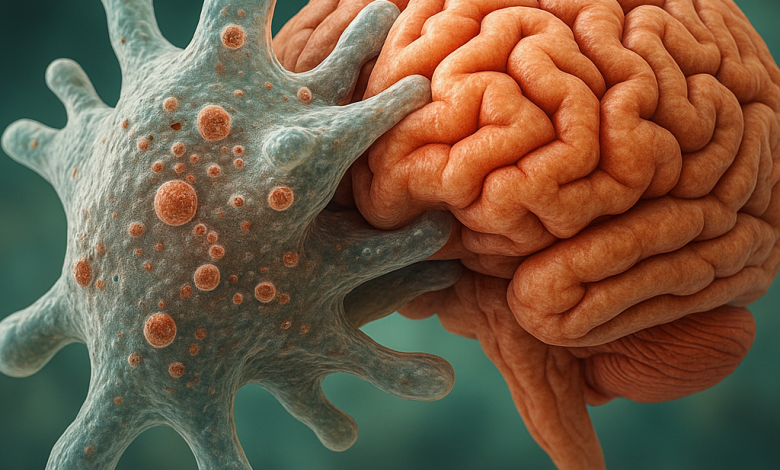
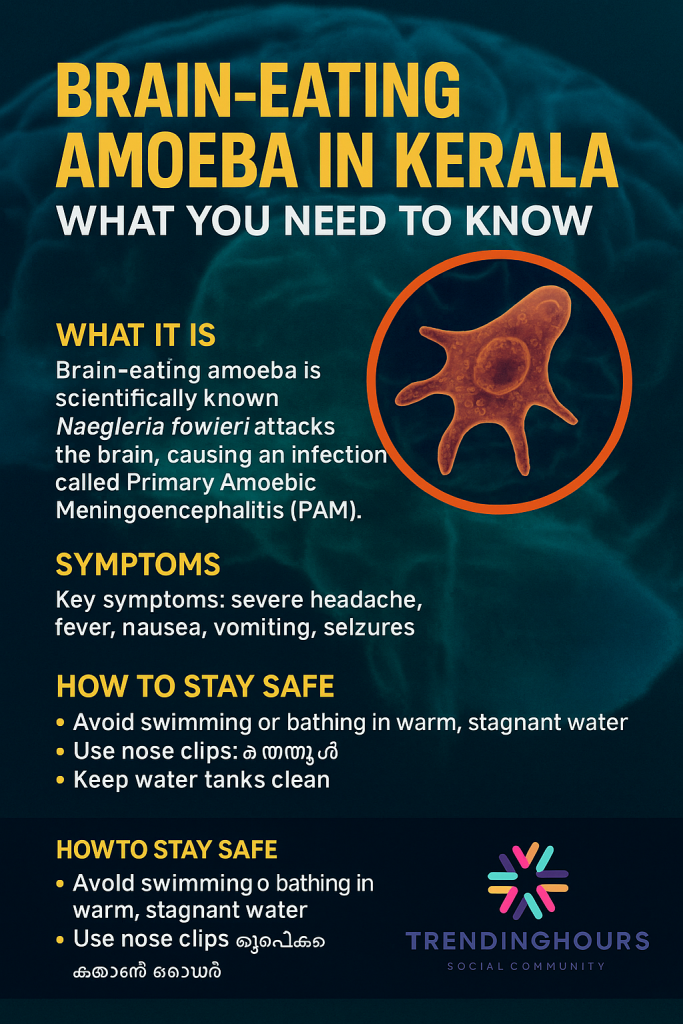
The medical name of this organism is Naegleria fowleri. It lives in warm freshwater — lakes, ponds, rivers, poorly maintained swimming pools, and even untreated well water.
The amoeba becomes dangerous when it enters the human body through the nose. From there, it travels to the brain, where it causes a severe infection called Primary Amoebic Meningoencephalitis (PAM). This leads to brain swelling, tissue damage, and often death.
The good news? It cannot infect you if you drink contaminated water. It only becomes a risk when water goes up the nose.
Why Is Kerala Seeing More Cases Now?
Experts say several factors are making this outbreak more severe:
- Hotter Temperatures – Kerala’s warm climate, combined with global warming, is creating the perfect environment for the amoeba to thrive in stagnant water.
- Scattered Cases – Unlike earlier years when infections were linked to one or two water sources, this time the cases are spread across different districts, making it harder to track.
- Wide Age Range – Patients have ranged from a 3-month-old baby to a 91-year-old elder, showing that age does not protect against the infection.
Symptoms to Watch Out For
The first symptoms usually appear within 1–9 days of exposure. They can be easily mistaken for regular meningitis or even a viral fever. But PAM progresses much faster.
Key symptoms include:
- Severe headache
- High fever
- Nausea and vomiting
- Stiff neck
- Seizures
- Confusion or hallucinations
Once these symptoms worsen, the disease becomes very hard to treat. That’s why early awareness is critical.
Is There a Cure?
Treatment for PAM is extremely challenging. Doctors usually give a combination of antifungal and antimicrobial medicines. But the survival rate worldwide remains very low. Only a handful of patients across the globe have survived, mostly because they were diagnosed very early.
This makes prevention the best and only reliable protection.
How to Stay Safe from the Brain-Eating Amoeba
Health experts and Kerala authorities have issued important safety guidelines. Here’s what you can do to protect yourself and your family:
- Avoid swimming or bathing in warm, stagnant water such as ponds, lakes, or untreated wells.
- Use nose clips if you do enter freshwater, as the amoeba only infects through the nose.
- Keep water tanks and wells clean. Regular chlorination and proper maintenance can kill the amoeba.
- Avoid letting children play in dirty or standing water.
- Seek immediate medical help if you or someone in your family develops the symptoms after being in freshwater.
Remember: Drinking contaminated water will not cause the infection. The risk only comes when water enters the nose.
What Authorities Are Doing
Kerala’s health department has stepped up action. They are:
- Testing water sources to detect the amoeba.
- Urging people to use safe and treated water.
- Asking hospitals to be alert for patients showing early symptoms.
- Running awareness campaigns in rural and urban areas.
But since the disease spreads in natural water bodies, the biggest responsibility lies with individuals to follow preventive measures.
Why This Matters Beyond Kerala
The rise of cases in Kerala is not just a local issue. Experts believe that climate change — with hotter summers and warmer water bodies — could make such outbreaks more common in different parts of India and the world.
This outbreak is a reminder that public health and environmental change are connected. As temperatures rise, new health threats can emerge, and communities must be prepared with awareness and prevention.
Conclusion
The brain-eating amoeba may be rare, but when it strikes, it can be devastating. The Kerala outbreak shows how quickly things can turn serious, with dozens of lives already lost in 2025.
The best defense is knowledge and prevention. Avoid risky water exposure, use nose protection, maintain clean water sources, and never ignore symptoms.
Kerala’s tragedy is a lesson for all of us: in a changing climate, staying safe means staying informed. By being cautious and aware, we can protect ourselves and our loved ones from this deadly but preventable infection.
Deprecated: htmlspecialchars(): Passing null to parameter #1 ($string) of type string is deprecated in /home/nqtjeubh/public_html/wp-includes/formatting.php on line 4724