Dehradun Cloudburst and Himachal Landslide 2025: Red Alert in Uttarakhand and HP
A Night of Chaos in Dehradun
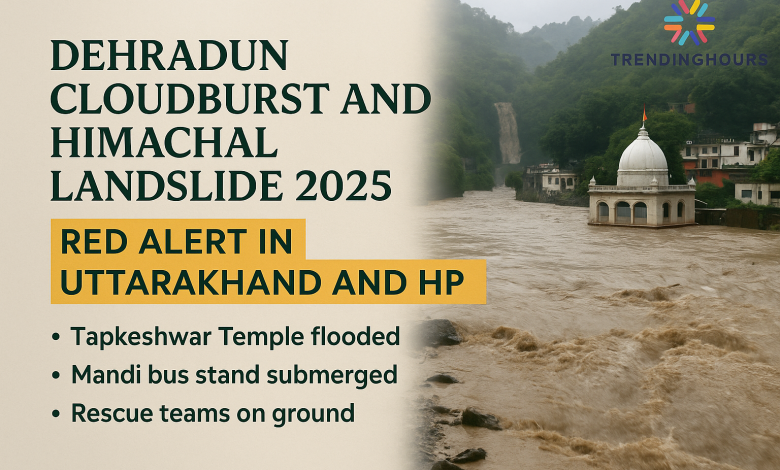
The year 2025 has once again reminded us how fragile the Himalayan belt can be during the monsoon season. On Monday night, a sudden cloudburst in Sahastradhara, Dehradun, caused massive flooding. Within hours, the peaceful streams turned into raging torrents, submerging roads, shops, and homes.
The iconic Tapkeshwar Mahadev Temple, a spiritual hub for thousands of devotees, was heavily inundated as floodwaters swept through the area. For locals, this wasn’t just a natural disaster—it was the loss of livelihood, faith, and security all at once.
Himachal Pradesh Landslide Tragedy
While Uttarakhand was struggling with floods, neighboring Himachal Pradesh faced its own share of devastation. Continuous rainfall in Mandi district triggered a major landslide, leaving the city’s bus stand submerged and transport systems paralyzed. Vehicles were damaged, houses were swept away, and several lives were tragically lost.
According to a detailed report by the Times of India, local businesses and communities have been hit the hardest, with many families unsure how to rebuild after such destruction.
Himachal Pradesh Landslide Tragedy
While Uttarakhand was struggling with floods, neighboring Himachal Pradesh faced its own share of devastation. Continuous rainfall in Mandi district triggered a major landslide, leaving the city’s bus stand submerged and transport systems paralyzed. Vehicles were damaged, houses were swept away, and several lives were tragically lost.
Families who once depended on daily commuters now stand at a crossroads, wondering how to rebuild their lives after this calamity.
Impact on People and Infrastructure
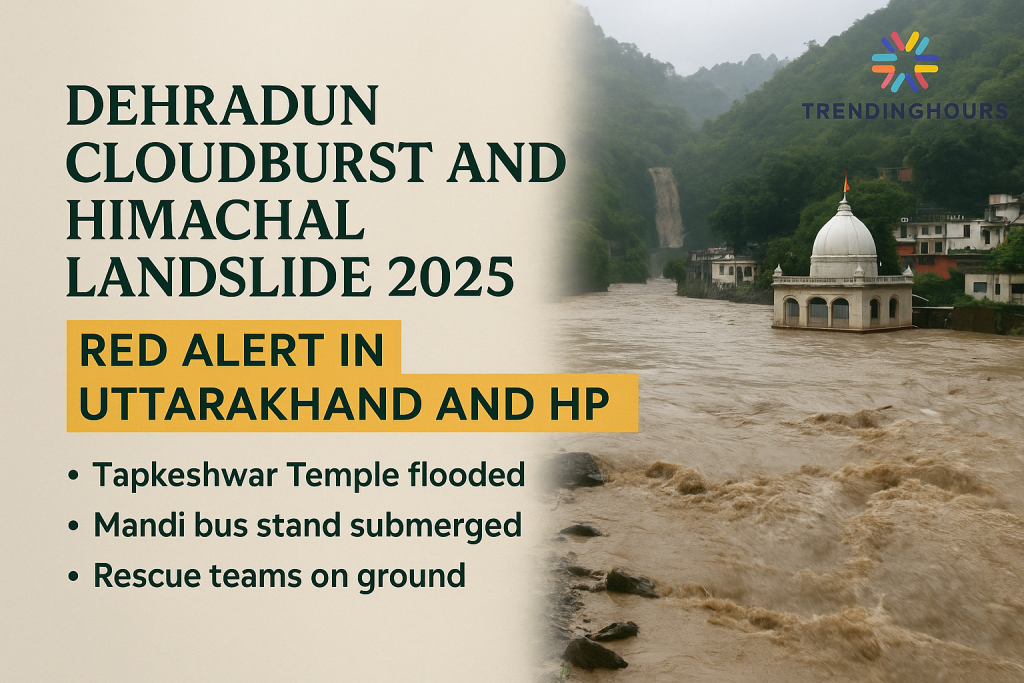
- Lives Missing and Lost: Reports confirm people missing in Dehradun, while Himachal recorded fatalities due to the landslide.
- Schools Closed: Authorities in both states announced the closure of schools to protect children from risk.
- Transportation Halted: Major roads in Mandi and Dehradun were blocked, disrupting connectivity.
- Economic Loss: Hotels, small businesses, and tourism-dependent livelihoods faced severe damage.
Red Alert Across Uttarakhand and Himachal
The India Meteorological Department (IMD) issued a red alert for Uttarakhand and Himachal Pradesh, signaling the possibility of more heavy rainfall in the coming days. Residents in flood-prone and landslide-sensitive areas have been advised to stay vigilant, while tourists have been asked to avoid unnecessary travel to the hills.
Rescue and Relief Operations
Despite the scale of destruction, efforts are underway to bring relief to the affected regions:
- SDRF and NDRF teams have been deployed in flood-hit and landslide zones.
- Local administration is shifting residents from vulnerable spots to safer shelters.
- Community support is rising, with volunteers and NGOs distributing food, water, and medicines.
- Helplines have been set up to connect families with missing persons.
Why These Disasters Are Increasing
The recurring cloudbursts and landslides raise an urgent question—why are these disasters becoming more frequent? Experts point to:
- Climate Change: Rising global temperatures intensify monsoon patterns.
- Unplanned Construction: Unchecked building near rivers and fragile slopes weakens natural defenses.
- Deforestation: Cutting down trees destabilizes soil and increases landslide risks.
If there is one takeaway from the Dehradun cloudburst and Himachal landslide, it is this: the Himalayas need care, not exploitation.
- Stronger Infrastructure: Building sustainable drainage systems and landslide barriers.
- Better Planning: Strict control on construction in eco-sensitive areas.
- Preparedness: Equipping locals with disaster management training and early-warning systems.
The Dehradun cloudburst and Himachal landslide of 2025 are not just headlines—they are real stories of families losing homes, children missing school, and communities struggling to survive.
The red alert is more than a weather warning; it is a reminder that the balance between development and nature must be respected. Protecting the mountains is not just an environmental duty—it is a promise to safeguard lives, cultures, and futures.