The Mystery of 3I/ATLAS – An Interstellar Comet Nears Mars and the Sun
A Rare Cosmic Visitor
Every once in a great while, the universe surprises us with something extraordinary. This year, astronomers discovered Comet 3I/ATLAS—an interstellar traveler racing through our Solar System. Unlike regular comets that circle the Sun in repeated orbits, this one is just passing by. Once gone, it will never return.
Hubble’s Stunning Glimpse
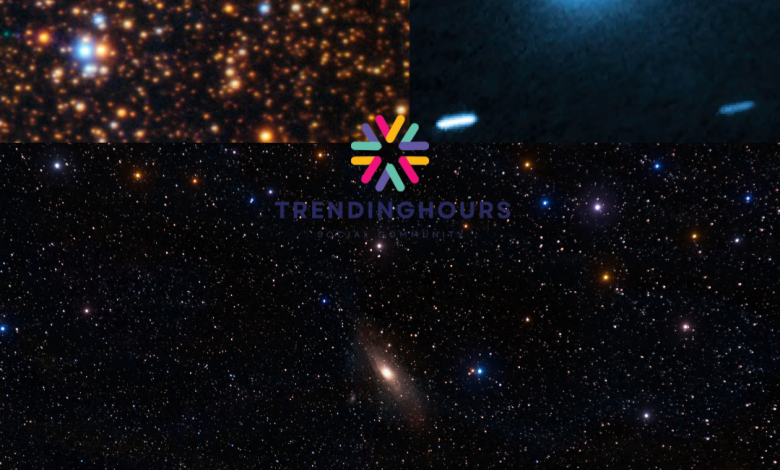
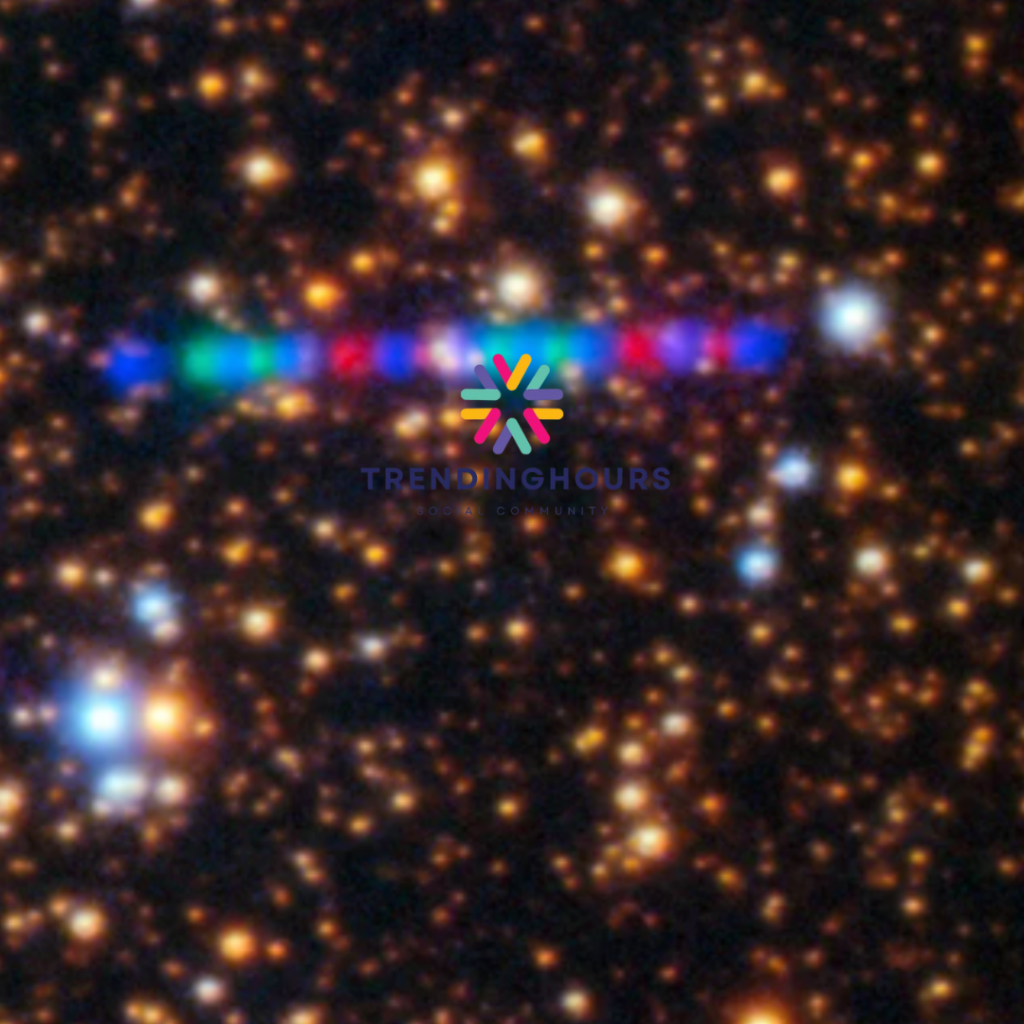
On 9 August 2025, NASA’s Hubble Space Telescope captured a breathtaking image of the comet. The photo revealed a glowing coma (a fuzzy cloud of gas and dust) and the beginning of a delicate tail—classic comet features that make it look both familiar and mysterious at the same time. The fact that something born in another star system can look so much like comets from our own backyard is nothing short of fascinating.
How Fast, How Far
- Speed: About 210,000 km/h (130,000 mph)—fast enough to cross Earth in minutes.
- Closest Approach to the Sun: Around end of October 2025, when it will swing just inside Mars’ orbit.
- Closest to Earth: Mid-December 2025, still at a safe distance of about 1.8 AU (270 million km).
So no, it’s not a danger to Earth. Instead, it’s a rare chance for scientists to study something truly alien.
Why Scientists Are Excited
What makes 3I/ATLAS special is not just its rarity but also what it’s made of. Early observations suggest a mix of carbon dioxide, water ice, and dust—chemicals that may carry clues about how planets and life itself form. Since it comes from beyond our Solar System, it’s like opening a time capsule from another corner of the galaxy.
A Moment for Skywatchers
Through powerful telescopes, astronomers and enthusiasts alike are keeping their eyes on the comet. It will remain visible to observatories until September 2025, before hiding behind the Sun’s glare. In early December, it will make a final appearance before fading into the vastness of space forever.
Why It Matters
3I/ATLAS reminds us how small our world really is in the grand scale of the cosmos. It is a one-time guest—here to share its story before vanishing into the interstellar dark. For scientists, it’s a treasure trove of data. For the rest of us, it’s a gentle nudge to look up at the night sky and feel that sense of wonder we sometimes forget.